


Sustainable Product & Services
Sustainable Product and Services
| Risk | Opportunity |
|---|---|
| Both domestic and international business operators and investors are placing greater emphasis on global trends concerning environmental, social, and governance (ESG) issues, as well as on evolving regulations that impact business operations. At the same time, the public is increasingly attentive to the health and well-being implications of business activities. Consequently, the Company may lose business opportunities and competitive advantage if it fails to develop products and services that meet the evolving and more sophisticated needs of both current and future customers—beyond basic expectations. These needs include those related to climate change, energy, and greenhouse gas emissions. Moreover, the emergence of new competitors in the utilities and service sectors, who can respond to customer demands more quickly, is intensifying market competition. This could result in a significant loss of revenue from the Company's products and services. | The Company serves a diverse customer base comprising leading firms across various industries. Through close engagement with these customers, the Company can effectively monitor and respond to evolving needs, enabling the swift and comprehensive development of products and services. By leveraging technology and innovative solutions, the Company is well-positioned to support emerging S-Curve industries and strengthen its long-term competitiveness. Furthermore, offering products and services that incorporate green technology enhances trust among local communities and fosters long-term coexistence with industry. |
Management Approach
The Company is committed to the continuous development of AMATA City Industrial Estates under the concept of a perfect city that creates value for all groups of stakeholders in accordance with the Company’s ALL WIN philosophy, which focuses on being stakeholder centric. Therefore, the Company has been focusing on developing products and services to address the needs and challenges of its manufacturing customers and to support their business success in the long run, as well as to respond to the needs of direct stakeholders who are affected by the Company's business operations, in order to gain good experiences in coexistence with the industrial sector and create mutual economic, social, and environmental values.
Innovation plays a vital role in driving business growth, differentiating products and services, and enhancing their value. It also improves operational efficiency, reduces costs, and mitigates negative impacts on society and the environment. The Company has therefore established an “Innovation Management Policy” to foster an innovation-driven culture within the organization. This involves encouraging employees to express creative ideas, develop inventions, conduct experiments, and explore new solutions. The Company also promotes employee engagement in skill development and co-innovation initiatives with suppliers, business partners, and relevant stakeholders. These efforts are aimed at strengthening the Company’s competitiveness through its ability to generate innovations that create value for both business and society.
The Board of Directors is responsible for overseeing the overall management of innovation, product and service development, as well as new business development. The Board provides guidance and recommendations to support business enhancement and promote the effective use of innovation across the organization. The Company has assigned the Chief Business Development Officer to be responsible for overseeing new business development, with a mandate to drive the expansion of business opportunities and support the Company’s long‑term growth. Senior executives in relevant functions are responsible for translating corporate policies and strategies into practical implementation by defining clear accountabilities, objectives, action plans, and performance indicators, as well as allocating appropriate resources. In this regard, the Chief Administration Officer and the Chief People Officer play a key role in fostering an organizational culture that supports innovation, by encouraging the participation of employees and relevant stakeholders in the creation and development of innovations. This includes promoting the application of technology and innovation to enhance the Company’s work processes, products, and services on an ongoing basis.
The Company has established a “Product & Service Development Framework” aimed at maximizing the value of its products and services to customers and all stakeholders. This framework focuses on stakeholder engagement, using various methods to survey, assess, and analyze the needs of current and potential customers, both regionally and globally. It includes trend and megatrend analysis, which are crucial in the real estate development business. The framework then uses this information to evaluate the impact, urgency, and importance of different factors to define the main objectives for product and service development. Meanwhile, it prepares for market readiness, collaborates with strategic business partners, and manages strategic innovation to design products and services that create competitive advantages. This also involves being open to feedback for continuous development. To achieve these goals, the Company has formed a SPRINT team composed of talented and creative employees, tasked with accelerating the development of products and services to meet customer needs more precisely.
Customer Engagement
In 2025, the Company collected information by conducting in-depth interviews with customers who are representatives of various industries to use the insights for analyzing and improving the Company's strategies and efficiently developing products and services that meet customer needs. The Company found that the environmental crises have become more severe, especially with climate change, leading to a global awareness of addressing environmental management across all sectors to mitigate the probability and severity of negative impacts. This has become a driving force for government agencies in many countries worldwide to declare and enforce more significant policies, and regulations, including new laws, and an increased demand for sustainability disclosure to prevent and mitigate negative environmental impacts. Factory operators in the AMATA Industrial Estate are crucial production hubs for major global investors who import and export to various countries. Therefore, it is essential for them to comply with the laws and regulations of important trading partners and their importing countries and strictly adhere to the environmental policies of their parent companies. Moreover, they must manufacture products and provide services that meet the growing environmental, social, and governance demands of their global customer base. Thus, factory operators seek products and services that prioritize social and environmental responsibility, adhere to the principles of circular economy principles, and provide transparent and verifiable data for sustainability disclosure.
AMATA Smart City Development
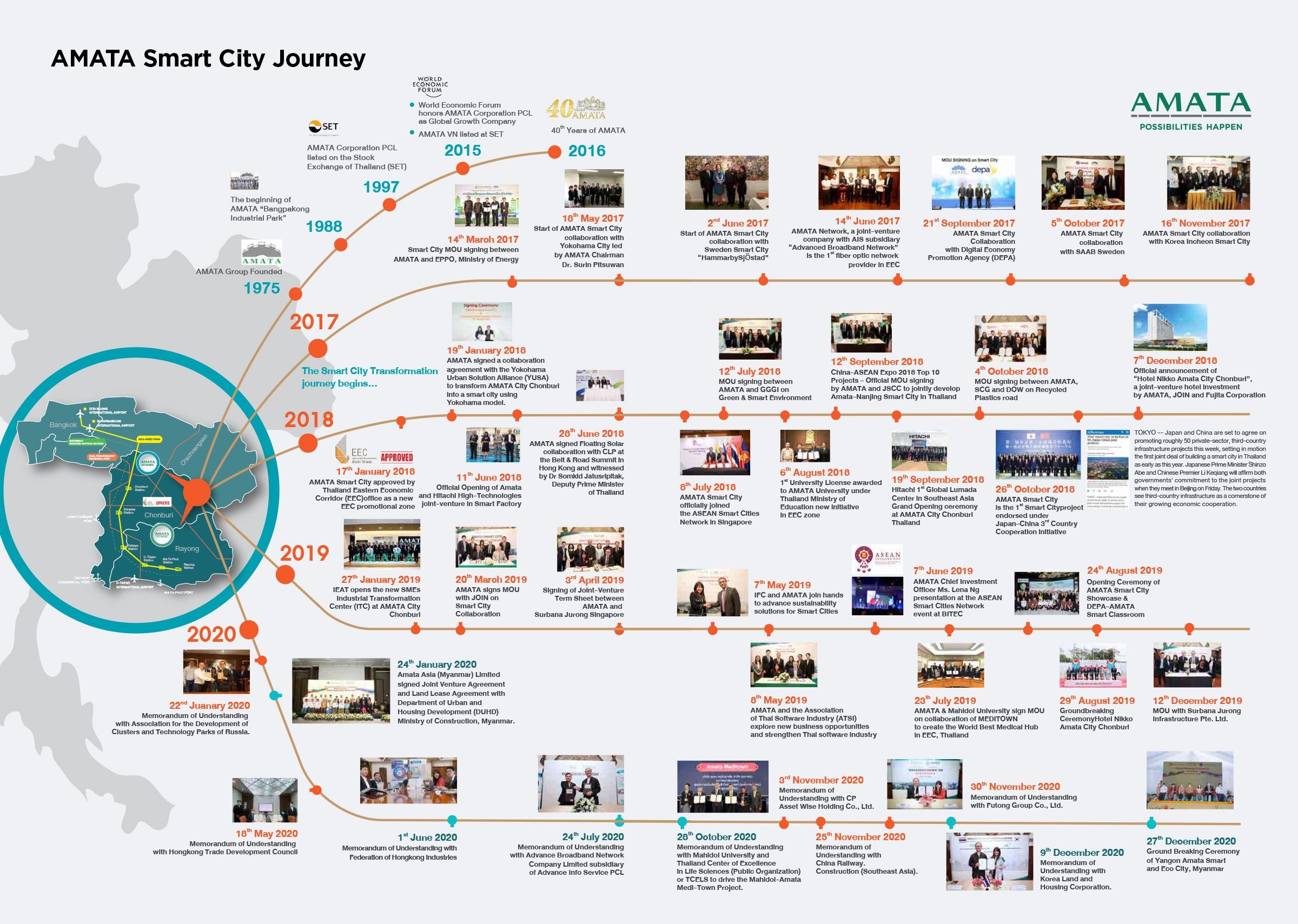
The Company is committed to becoming a leading developer of Smart Cities, effectively responding to global trends and emerging risks, while addressing economic, social, and environmental challenges, as well as meeting the evolving needs of customers. The Company is focused on developing new investment zones with international standards, improving the social and environmental landscape, and fostering a skilled workforce. AMATA Smart City will serve as a comprehensive investment area within the Eastern Economic Corridor (EEC) and as a regional learning hub. This initiative aims to drive regional economic growth and create economic value for Thailand. The Company is currently developing the AMATA Smart City Chonburi Industrial Estate, which commenced development in 2023. Furthermore, the Company has collaborated with various organizations to jointly develop smart cities in 2025.
- On 3 September 2025, AMATA Corporation Public Company Limited entered into a Memorandum of Understanding (MOU) with EZA Hill Properties Holdings Limited to explore the feasibility of potential collaboration in the development of ready‑built factory projects, logistics and warehouse projects, as well as other related activities.

Business Development in Response to Stakeholder and Societal Needs
Based on customer feedback from the AMATA Industrial Estate, the Company has learned that factory operators within the estate place a strong emphasis on skilled labor issues. These operators are concerned with maintaining a sufficient, quality workforce for continuous business operations and with the ability to respond to future business technologies and innovations. Consequently, the Company has initiated human resource development in the Eastern region to enhance skills, knowledge, and abilities in alignment with customer demands. The following initiatives were implemented in 2025:
- On 1 October 2025, AMATA Facility Service Company Limited, represented by Mr. Aukkares Choochouy, Managing Director, entered into a Memorandum of Understanding (MOU) with the Faculty of Public Health, Burapha University, represented by Associate Professor Kowit Suwannahong, Dean of the Faculty of Public Health. The collaboration aims to integrate academic knowledge and industrial expertise to support the study, research, and development of innovations in relevant areas, including environmental management, occupational health and safety, energy, digital systems, and health, as well as other related fields. This collaboration serves as a starting point for knowledge exchange, workforce development, and the extension of research outcomes, with the objective of contributing to the improvement of quality of life and the strengthening of sustainable competitiveness for both organizations and society as a whole.
Clean energy is one of the key issues that customers prioritize, as they increasingly set targets for reducing greenhouse gas emissions and achieving carbon neutrality. This has led to a significant rise in the demand for clean energy. In response, the Company has taken the following actions to meet the needs of its customers:
- In 2025, AMATA U Company Limited, a subsidiary of the Company, jointly invested in the establishment of AMATA B.Grimm Renewable Energy Company Limited to develop a floating solar photovoltaic power generation project within the AMATA City Chonburi Industrial Estate, with a total installed capacity of 42.5 megawatt‑peak (MWp). The project is intended to support demand for electricity generated from renewable energy sources among customer groups within AMATA industrial estates that have set targets to reduce greenhouse gas emissions or pursue carbon neutrality. At present, the project is undergoing procedures to obtain the required licenses for electricity generation and distribution, as well as other permits related to renewable energy, in accordance with applicable legal and regulatory requirements. The development of this project will serve as an important foundation for assessing the feasibility of expanding clean energy supply within the Group’s industrial estates in the future, as well as for the development of renewable energy solutions and energy efficiency initiatives to support the advancement of smart energy cities.
In response to growing customer demand within AMATA industrial estates for information on the greenhouse gas (GHG) emissions associated with products and services, which has become increasingly important for value chain management, climate target‑setting, and readiness for the transition to a low‑carbon economy, the Company has adopted the principles of Life Cycle Assessment (LCA) as a supporting tool for the development and improvement of product design and utility systems. This approach helps enhance operational efficiency and supports the appropriate management of environmental impacts.
In 2025, the Company conducted a Carbon Footprint of Product (CFP) assessment for its industrial water product in accordance with ISO 14067:2018, and consistent with the life cycle assessment framework under ISO 14040 and ISO 14044. The assessment covered GHG emissions from raw material acquisition through the production process (cradle‑to‑gate) for operations at AMATA City Chonburi Industrial Estate. The assessment results indicated a product carbon footprint of 694 grams of carbon dioxide equivalent (gCO₂e) per 1 cubic meter (m³) of industrial water. The main sources of GHG emissions were identified in the production stage, particularly electricity consumption for the treatment process and water pumping within the system.
The Company has used these assessment results to identify significant product‑level sources of GHG emissions and to support the consideration of measures to improve energy efficiency and manage GHG emissions in the industrial water production process. The results are also used as a reference information to support customers in assessing and managing indirect GHG emissions across the value chain. The CFP assessment is currently undergoing verification by an independent external verifier in accordance with the requirements of the relevant standards, and the Company expects the verification process to be completed by February 2026.
The Company prioritizes the quality of life for those working in industrial estates. To meet the needs of both Thai and foreign workers, as well as to accommodate domestic and international investors who come to the estate, the Company has developed the Hotel Nikko AMATA City Chonburi. This joint venture involves AMATA Corporation Public Company Limited, Fujita Corporation Company Limited (part of the Daiwa House Group), and the Japan Overseas Infrastructure Investment Corporation for Transport & Urban Development (JOIN). Managed by Okura Nikko Hotel Management, a renowned international hotel chain from Japan, it is the first hotel in Thailand to be jointly invested by the Japanese government. Operating under the concept of 'Home for people away from home’, it offers comprehensive services to support the activities of its guests and has been in operation since 2022.
Hotel Nikko AMATA City Chonburi is the first and only hotel located within an industrial estate in Chonburi Province. As such, it plays an important role in supporting the investment and business ecosystem within the industrial estate by serving the needs of investors, executives, and business visitors from various countries, particularly Japanese clients, who are key business partners of the Company. The hotel offers a total of 220 guest rooms, along with a Japanese restaurant and banquet facilities. Its distinctive features include Japanese‑standard service quality, a strategic location, and business‑oriented amenities that support accommodation, business hospitality, and the organization of business‑related activities in an integrated manner. At the same time, its location within the industrial estate enhances convenience and safety, while helping to reduce travel time and associated logistical burdens.
In addition, the hotel has consistently received high guest satisfaction ratings, with average scores of 8.8 on Booking.com, 9.0 on Agoda, and 9.1 on Trip.com. These ratings reflect positive feedback on room quality, cleanliness, comfort, and overall service standards. Accordingly, the hotel serves not only as accommodation for business travelers, but also as part of the service infrastructure that supports the image and readiness of AMATA industrial estates in accommodating international‑standard business activities.
Strategic Innovation Management
The Company has emphasized the significance of the innovation management process to make a difference and increase the value-added to its products and services. This includes a focus on refining and improving work processes for greater efficiency, thereby reducing operating costs and mitigating the negative impacts on society and the environment. Therefore, innovation is an important mechanism driving the Company to grow sustainably. Consequently, the Company has prioritized innovation development within the organization. This began with the development of innovative thinking skills, knowledge, and competency among the Company’s personnel, as defined in the attributes of the AMATA DNA, regarding innovative creativity and trying new ideas for development, which are also applied as indicators of employee performance evaluations at all levels.
The Company has developed a strategic innovation management process to enable its innovation management to support its business strategy, create value-added products and services, enhance work efficiency, minimize negative environmental impacts, and leverage the quality of life of all groups of stakeholders.
In this regard, the Company has two approaches to acquiring business innovations (INPUT), which are 1) collaborating with strategic partners to develop innovations (EXTERNAL) and 2) promoting its employees to be the creators of business innovations (INTERNAL). The obtained innovations, either concepts or already implemented projects, will be supported with the resources required for further development to create additional value before delivery to customers and stakeholders.
1. Collaborating with strategic business partners to develop innovation
The Company has established strategies for the development of smart cities and supports projects through its strategic business partners to achieve high-quality business development rapidly. Consequently, the Company has collaborated with leading companies and organizations, both domestically and internationally, that are renowned in various fields, to develop new business projects under the AMATA Smart City concept. These collaborations involve strategic business partners from countries including China, Taiwan, Japan, Europe, and others. The goal is to support economic growth by attracting investment in target industries and research and development, as well as enhancing the quality of life for workers, promoting business ecosystem innovation, and facilitating research and development activities.
The cooperation with these leading companies and organizations will not only concretely drive the development of a smart city through various projects but also benefit Thai entrepreneurs in related industries. They will learn new technology concepts from foreign experts via the technology transfer process and apply these insights to research and develop their own technology. This will become a crucial mechanism for driving sustainable development in Thailand.
In 2025, the Company collaborated with Jia Tech International Investment Company Limited to explore the development of a co‑working space intended to support research and development (R&D) activities, as well as the incubation and early‑stage development of products and technologies. The objective of this initiative is to support companies from Taiwan in establishing R&D operations in Thailand. The project is currently under preparation for the establishment of a joint venture company and is expected to be located within the AMATA Smart City Chonburi Industrial Estate.
2. Promoting employees to be innovation creator
The Company is committed to fostering a culture where employees at all levels are encouraged to unlock their potential and drive innovation for the betterment of the business, society, and the environment, as well as to participate in the continuous improvement of work processes in line with the Company’s policies and strategies. To support this, the Company organizes an annual 'Innovation Project & Idea Contest' on a continuous basis since 2018, providing a prestigious platform for employees to showcase their creativity and propose groundbreaking ideas that contribute to the development of innovative products, services, and collaborative excellence in the workplace. To encourage participation, the Company has allocated incentive awards for employees submitting innovation projects and ideas. Over a period of seven years, total prize money awarded amounted to more than 10.2 million Baht, with part of the funding support provided by Mr. Vikrom Kromadit and the AMATA Foundation.
In 2025, the Company was in the process of reviewing and adjusting its internal innovation promotion mechanisms, including the criteria and guidelines for project consideration, to ensure alignment with the current business context and operating approach. During this transition period, the Company placed emphasis on monitoring, supporting, and further developing high‑potential innovation projects from previous years, with the objective of facilitating practical application and contributing to the creation of meaningful value.
One of the award‑winning innovation projects from the previous year that has been further developed and implemented in a tangible manner is the AMATA Circular Waste Management Excellence Center. This initiative reflects the role of employees in contributing to the development of new business models, the efficient management of resources, and the practical application of circular economy principles.
AMATA Circular Waste Management Excellence Center Project
AMATA Facility Services Co., Ltd., a subsidiary of AMATA Corporation Public Company Limited, has been responsible for solid waste management within AMATA Industrial Estates since 2011. The Company provides waste collection, transportation, segregation, and disposal services to tenants and factory operators within the estates, in collaboration with legally licensed and specialized contractors. The waste separation plant is designed for efficient sorting, enabling the recovery of recyclable materials and the conversion of waste into refuse-derived fuel (RDF), with the goal of minimizing or eliminating landfill disposal—aligned with the Zero Waste to Landfill objective.
Currently, AMATA Facility Services Co., Ltd. is facing increasing challenges in waste management amid tightening environmental regulations and shifting industry trends that emphasize the circular economy. Many factory operators have enhanced their internal processes to reduce waste at the source and increase resource recirculation within their facilities. As a result, the volume of waste requiring external management has significantly declined—by approximately 10% in 2023—even though the number of customers utilizing the waste management service has continued to rise. Furthermore, the Zero Waste to Landfill approach—once a key standard in industrial waste management—may no longer be sufficient to meet the evolving expectations and compliance requirements of today's clients. These shifting expectations, combined with stricter environmental standards and circular economy trends, pose potential risks to the Company’s recurring income and future business growth.
In 2024, AMATA Facility Services Co., Ltd. initiated the “AMATA Circular Waste Management Excellence Center” project, a new business model aimed at reducing the associated risks. This center will serve as a hub that integrates waste management, innovation, and sustainable development. The focus is on enhancing the efficiency of waste management and recycling processes, generating added value from residual materials, and fostering revenue growth that also delivers value to society and the environment.
This new business model has repositioned AMATA Facility Services Co., Ltd. from being merely a municipal solid waste service provider to an integrated waste management partner offering end-to-end solutions. These services include capacity building and awareness training, serving as a hub for collaborative partnerships with allied industries, waste collection, value-added processing using appropriate technologies, documentation and regulatory compliance support, as well as technical consulting on sustainable waste management.
In 2025, AMATA Facility Service Co., Ltd. continued to further develop the AMATA Circular Waste Management Excellence Center, which has begun to demonstrate more tangible business‑related outcomes. Revenue from waste management services showed an upward trend, driven by the expansion of the customer base in extension areas, as well as an increase in the volume of industrial waste managed from both existing and new customers. In addition, the Company commenced the purchase of recyclable waste from factories within the industrial estates for sorting, compaction, and resale. This initiative has contributed to the generation of additional revenue through value creation from resources, while supporting the development of a business model aligned with circular economy principles.
In addition, the Company expanded area‑based collaboration with Tha Kam Subdistrict Municipality, Chachoengsao Province, and three educational institutions in the local area to jointly design a pilot project on community‑level circular waste management. Tha Kam Subdistrict Municipality serves as the principal coordinating entity and as a pilot area for linking cooperation among the education sector, local communities, and industrial operators in the area. The initiative also includes a concept to seek cooperation from more than 80 surrounding factories to channel plastic waste into the project’s waste management system. Such collaboration has contributed to an increase in the volume of waste and recyclable materials entering the system, thereby enhancing the Company’s potential to generate revenue from recyclable waste management in subsequent phases.
To support the expansion of operations and cost management, in 2025 the Company installed a plastic bottle compactor to enhance the efficiency of waste segregation and the collection of recyclable materials within the project area. The Company also installed a rooftop solar power generation system on the waste sorting facility, with a total installed capacity of 52 kilowatt‑peak (kWp), to supply electricity to contractors operating within the Company’s premises. Although electricity generation commenced in the latter part of 2025 and initially contributed to cost reductions to a limited extent, the installation represents an important step in establishing an energy foundation to support long‑term cost control. In addition, the Company improved the management of waste transportation for refuse‑derived fuel (RDF) production by increasing the volume transported per trip. This enhancement supports more effective cost control under lump‑sum transportation arrangements and contributes to the overall efficiency of the waste management process.
Project Performance in 2025
| Benefits to the Company | Benefits to society | Benefits to the environment |
|---|---|---|
|
|
|
Business Development in Foreign Countries
The Company has foreseen opportunities in CLMV countries where its strategic locations have high potential in connection to global supply chains and are now the focus of leading investors. Besides, the CLMV’s policies promoting regional economic development have become increasingly interconnected, presenting a high potential to support sustained economic growth in the future. The Company, therefore, has expanded its Eco-Industrial City business to CLMV countries by implementing its expertise and experiences in city development and introducing its AMATA Smart City model to open new business opportunities in some of those countries.
Since the People’s Republic of China announced the Belt and Road Initiative (BRI) in 2013 to enhance economic connectivity between China and regions around the world, the Lao People’s Democratic Republic has assumed an increasingly important role as a land‑based transportation link between China and Southeast Asia. This role is particularly evident through the China–Laos Railway network, which connects Boten at the China–Laos border to Vientiane Capital over a total distance of more than 1,035 kilometers, and has been in commercial operation since late 2021.
In 2025, the China–Laos Railway was able to accommodate approximately 24.5 million tons of cargo, or an average of more than 67,000 tons per day, representing an increase of 25% compared to the previous year. Of this total, more than 5.5 million tons were attributable to international freight transport. At the same time, the range and value of transported goods became more diversified, shifting from a focus on agricultural products and primary raw materials toward industrial goods and higher value‑added technology products. The development of such infrastructure supports the Lao PDR Government’s objective of transforming the country from a land‑locked state into a land‑linked economy, facilitating regional supply chain connectivity and contributing to long‑term economic development along the China–Laos–ASEAN economic corridor.
In alignment with the Company’s vision to support the development of regional supply chains, the Company recognizes the potential of infrastructure development and energy resources in the Lao PDR. Accordingly, AMATA City Lao Company Limited was established in 2020 to develop smart city projects and environmentally friendly industrial estates. The projects are able to connect to the national power grid of the Lao PDR, where electricity generation is largely sourced from renewable energy, particularly hydropower. In addition, smart infrastructure networks have been developed within the project areas to support the growing demand for renewable energy utilization by enterprises operating within the estates.
On 25 August 2023, the Company was granted official operating licenses for two smart and eco-industrial city development projects in the Lao People's Democratic Republic: The AMATA project in Luang Namtha Province (AMATA Smart & Eco City Nateuy) And the project in Oudomxay Province (AMATA Smart & Eco City Namor)
A significant development in 2025 arose from the Government of the Lao People’s Democratic Republic considering and approving special tax investment incentive measures for targeted industries seeking to invest in the AMATA Smart and Eco City project, with the objective of enhancing the country’s competitiveness. In addition, the public sector is in the process of reviewing and amending laws and regulations related to business operations in order to facilitate investment by both domestic and foreign investors. According to rankings published by the World Bank, the Lao PDR was ranked 154th, based on factors such as business licensing procedures and timelines, operating costs, the legal and regulatory framework, and the enforcement of relevant laws and regulations.
In 2025, AMATA City Lao Company Limited commenced construction of the AMATA Smart and Eco City Namor in the province of Oudomxay, which spans a total area of 31.5 square kilometers, with approximately 18.10 square kilometers designated for industrial use—accounting for 75% of the total area. Phase 1 of the project covers 8.98 square kilometers and has received support from the central government administration and the Oudomxay provincial authorities. The project is expected to be ready for initial operations in 2026.
These developments represent the Company’s commitment to expanding sustainable and environmentally friendly industrial infrastructure in alignment with the local economic growth and connectivity opportunities in the region. Therefore, the Company has adopted the environmental care, conservation, and management practices from its projects in Thailand for application in Lao PDR projects. This includes policies on water and waste management, development and management of green areas within industrial estates, and stakeholder engagement, to achieve balanced growth. The Company has initiated a concept to encourage companies operating within the project to share profits from operations to contribute to environmental impact reduction, protection of nearby forest areas, and promote the participation of businesses within the project according to the Company's ALL WIN business philosophy.
Following the announcement of China’s Belt and Road Initiative (BRI) in 2013 to enhance the connectivity of the Chinese economy with other regions of the world, Laos is one of the land routes connecting the transportation of goods from Kunming in Yunnan, China, through northern Laos to Southeast Asia via a 1,035-kilometer-long medium-speed rail. This has resulted in investment in infrastructure development, particularly the China-Laos railway from Boten, on the border between China and Laos, to the capital city, Vientiane. This Vientiane-Boten railway has been officially operated since December 2021 and currently handles up to 19.6 million tons of cargo annually, or approximately 50,000 tons per day, of which 4.78 million tons are cross-border shipments. These figures highlight the railway’s strategic role in supporting regional trade and logistics across the Mekong subregion.
The launch of the China-Laos railway represents a pivotal opportunity to enhance economic connectivity between China and the rapidly growing Southeast Asia region. This aligns with the Company’s vision to develop perfect cities that create value for all stakeholders. As a result, AMATA City Lao Sole Co., Ltd. was established in 2020 to develop a Smart and Eco City in Laos. In each project, it is possible to connect to Lao’s electricity grid, with a source of renewable energy production, especially hydropower, and the development of a smart network within the project to fulfill the business’s renewable energy demands.
On 14 March 2023, Mr. Malaithong Kammasit, Minister of Industry and Commerce of the Lao People's Democratic Republic (Lao PDR), Mr. Arsa Sarasin, Chairman of AMATA City Laos Company Limited, and Mr. Vikorn Kromadit, Chairman of AMATA Corporation Public Company Limited, together with senior executives of the Lao People's Democratic Republic and the AMATA Group, acted as witnesses in the signing ceremony of the Memorandum of Understanding (MOU) on the development of modern and environmentally friendly industrial estate between the Ministry of Industry and Commerce of Lao PDR and AMATA City Laos Company Limited, with Mr. Buavanh Vilavong, Acting Permanent Secretary of the Ministry of Industry and Commerce of Lao PDR, and Mr. Varong Tangpraprutkul, Managing Director of AMATA City Laos Company Limited, are the signatories of the cooperation. This MOU signing aims to foster cooperation in promoting the development of the modern and environmentally friendly industrial estate “Smart & Eco City” initiatives in Lao PDR. This includes development related to AMATA projects in Luang Namtha and Oudomxay Provinces, ensuring successful outcomes in economic, social, and environmental aspects under sustainable development principles.
On 25 August 2023, the Company was granted official operating licenses for two smart and eco-industrial city development projects in the Lao People's Democratic Republic: The AMATA project in Luang Namtha Province (AMATA Smart & Eco City Nateuy) And the project in Oudomxay Province (AMATA Smart & Eco City Namor).
In addition to project development, the Company recognizes the importance of enhancing the investment appeal of the Lao PDR. It has proposed that the government consider tax incentives to improve competitiveness, along with regulatory reforms to facilitate business operations in the country. Currently, Laos ranks 154th in the World Bank’s Ease of Doing Business index, which assesses factors such as procedural steps and timeframes for obtaining permits, operating costs, legal framework, regulations, and enforcement.
In 2024, AMATA City Lao Co., Ltd. began the design and construction of the AMATA Smart and Eco City Namor in the province of Oudomxay, which spans a total area of 31.5 square kilometers, with approximately 18.10 square kilometers designated for industrial use—accounting for 75% of the total area. Phase 1 of the project covers 8.98 square kilometers. With support from the Lao government and Oudomxay Province authorities, AMATA City Lao Co., Ltd. has initiated land compensation for Phase 1, and it is expected that investors will be able to begin construction in 2025, with operations starting in 2026.
These developments represent the Company’s commitment to expanding sustainable and environmentally friendly industrial infrastructure in alignment with the local economic growth and connectivity opportunities in the region. Therefore, the Company has adopted the environmental care, conservation, and management practices from its projects in Thailand for application in Lao PDR projects. This includes policies on water and waste management, development and management of green areas within industrial estates, and stakeholder engagement, to achieve balanced growth. The Company has initiated a concept to encourage companies operating within the project to share profits from operations to contribute to environmental impact reduction, protection of nearby forest areas, and promote the participation of businesses within the project according to the Company's ALL WIN business philosophy.
Economic Performance
In 2025, the Company recorded total revenue of 14,524.34 million Baht, representing a slight decrease of 3.09% from 2024. Net profit amounted to 4,098.10 million Baht, reflecting an increase of 18.54% from the previous year. The Company’s revenue structure can be classified into three main segments: 8,702.81 million Baht from property sales; 4,545.16 million Baht from utilities and services; and 1,276.37 million Baht from rental income and other income. Overall, the gross profit margin from the Company’s core businesses increased from 33.74% in 2024 to 44.56% in 2025.
Revenue from property sales
million baht
Revenue from Utilities and Services
million baht
Revenue from Rental and Others
million baht
In 2025, the Company was able to maintain profitability and financial strength on a continuous basis, amid volatile economic and industry conditions, through enhanced internal management efficiency, the integration of data, systems, and operational processes, and the implementation of strategies focused on long‑term value creation across all core business segments.
Although revenue from property sales declined by 3.35% due to a slowdown in land transfers compared with the previous year, the gross profit margin increased by 54.35%. This performance reflects the Company’s effectiveness in project development, cost management, and value enhancement of smart industrial estates under the ESG framework, which contributes to strengthened competitiveness, risk mitigation, and the creation of sustainable economic value.
For the utilities business, revenue declined by 4.90%, primarily due to a slowdown in electricity consumption in Vietnam. Nevertheless, the Company was able to increase its gross profit margin by 18.22%, supported by effective resource management, infrastructure readiness, and the application of waste reduction and resource efficiency approaches in the design and development of utility systems, tailored to the context and suitability of each project. These efforts contribute to reducing dependence on natural resources and mitigating long‑term operational risks for both the Company and its customers.
At the same time, the ready‑built factory and rental space business adjusted its operating model by focusing on industrial segments requiring large‑scale space, alongside the development of buildings and infrastructure designed to support more efficient operations. This was accompanied by disciplined capital expenditure (CAPEX) and operating expenditure (OPEX) management. As a result, rental income increased by 9.92%, while the gross profit margin rose by 77.93%, contributing to greater continuity of recurring revenue, enhanced financial stability, and the long‑term enhancement of asset value.
The Company recognizes that climate change trends are a significant factor influencing the Company’s performance and strategic direction, both as risks arising from increasingly stringent environmental regulations and as physical risks that may affect infrastructure. At the same time, these trends also create opportunities for the development of value‑added products and services, such as clean energy solutions and low‑carbon industrial water, in response to customer demand for the management of greenhouse gas emissions throughout the value chain.
Furthermore, the entry of customers from new industrial sectors is expected to affect the Company’s revenue structure in the future. Accordingly, the Company has adjusted its operating approach by establishing a dedicated unit responsible for marketing strategy and business opportunity analysis, including the assessment of potential investors and new target industries. This has been undertaken in parallel with the development of employee capabilities, in order to support cluster‑based investment promotion and to enable stable and sustainable business growth.
Start
Building the Future
with AMATA

Start
Building the Future
with AMATA
Contact us for more details.
(+66) 38 939 007
(+84) 251 3991 007 (South)
(+84) 203 3567 007 (North)
(+95) 1 230 5627
(+856) 21 810007
(+856) 20 5710007 (Chinese)
(+856) 20 57550007 (English)
© AMATA CORPORATION PCL. All rights reserved.  Web by Toneyes